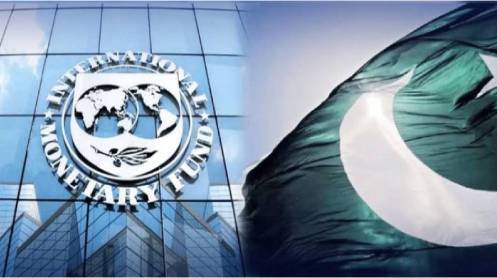
ISLAMABAD: The federal government on Monday urged all provincial governments to generate more than Rs400 billion in additional taxes during the next fiscal year, mainly from the agriculture, services and real estate sectors, to meet key commitments made with the International Monetary Fund (IMF).
With the proposed provincial contribution, the cumulative additional tax burden under the upcoming budgets of the federation and provinces is expected to exceed Rs1.1 trillion for fiscal year 2026-27.
According to government officials, Finance Minister Muhammad Aurangzeb chaired a virtual meeting with provincial finance ministers and shared revised revenue targets for the provinces. Nearly half of the additional target — around Rs200 billion — has been assigned to Sindh, followed by approximately Rs175 billion for Punjab, Rs45 billion for Khyber-Pakhtunkhwa and nearly Rs20 billion for Balochistan.
Officials said Sindh’s higher target was mainly due to revenue collection through seaports. The additional targets are part of IMF conditions requiring provinces to generate extra taxes equal to 0.3% of GDP, estimated at around Rs430 billion.
Alongside provincial efforts, the federal government is expected to mobilise nearly Rs700 billion through new taxation measures, enforcement actions and higher petroleum levy collections. The Federal Board of Revenue (FBR) is projected to contribute around Rs430 billion in additional taxes, while petroleum levy revenues are expected to increase by Rs260 billion.
Sources said the FBR has started sharing income tax and sales tax return data with provincial governments to help them identify untaxed sectors and improve revenue collection.
The IMF expects provincial revenues to increase from at least Rs1.2 trillion in the current fiscal year to nearly Rs1.65 trillion in FY2026-27, while the lender’s staff-level projections place total provincial collections closer to Rs1.95 trillion.
During the meeting, the federal government urged Sindh to improve tax collection from the agriculture and real estate sectors. Officials pointed out that Sindh collected Rs21.4 billion in stamp duties during the first nine months of the current fiscal year compared to Punjab’s Rs38 billion.
Punjab was also asked to strengthen agricultural income tax collection. The province informed the centre that it planned to expand the General Sales Tax (GST) on services to 40 major cities after collecting Rs244 billion from services tax during the first nine months of the fiscal year.
According to the IMF, provincial tax revenues have been growing faster than nominal GDP mainly because of the expansion of GST on services and stronger enforcement measures. However, agricultural income tax collections remained below expectations due to delays in implementing revised tax rates and weak enforcement.
The IMF has stressed the need for provinces to increase revenue from sales tax on services, property taxes, stamp duties, agricultural income tax and registration fees. Provinces are expected to gradually expand GST enforcement across all sectors of the economy.
The lender observed that agriculture remains Pakistan’s most undertaxed sector, contributing 24.6% to the economy while facing an effective tax rate of only 0.3%. In contrast, petroleum products carry an effective tax rate of 166%.
For the next fiscal year, the IMF has set a petroleum levy collection target of Rs1.727 trillion, around Rs260 billion higher than the current year’s target.
The finance minister also asked provinces to coordinate closely with the IMF while finalising their budgets. Pakistan has assured the lender that provincial governments will avoid introducing policies that could undermine agreed reform commitments.
Officials informed the provinces that the federal government has committed to achieving a primary budget surplus of Rs2.8 trillion, or 2% of GDP, in the next fiscal year. Interest payments alone are estimated to exceed Rs7.8 trillion.
The government is currently facing an estimated revenue shortfall of nearly Rs1 trillion due to weak FBR performance and is attempting to bridge the gap through enforcement measures, increased petroleum levy collection, reduced development spending and higher provincial cash surpluses.
Story by Shahbaz Rana